franman

About Gary Fieldsend

I work with companies that are franchising their business and consult with them on the best way to document their system standards and procedures. I then create a customized franchise operations manual that is used by new franchisees. I have written over 20 manuals for businesses new to franchising as well as established companies like Cricket Communication, Radio Shack, Panda Express, ServiceMaster, ColorTyme, and Snap Fitness. Feel free to contact me if you need an operations manual or if you have questions about the many options available for companies needing manuals.
27 05, 2026

Why Franchise at All? Grow Without Depleting Your Resources (Q&A Guide)

By |May 27th, 2026|Blog, Franchise Development, Q&A|Comments Off on Why Franchise at All? Grow Without Depleting Your Resources (Q&A Guide)

Grow Without Depleting Your ResourcesQ: Why would anybody choose to franchise instead of growing on their own?

Franchising is a way to grow without depleting your own limited resources.

If you are running a successful business, you are likely a big fish in a small pond. Franchising gives you the opportunity to expand into a much larger market without having to fund and manage every new location yourself.

Instead of trying to do everything on your own, franchising allows you to grow by leveraging the resources of others.

Q: What does it mean to “leverage resources” through franchising?

When a business grows, it needs four key things. Money, people, time, and connections.

Franchising allows you to access all four through your franchisees.

You are no longer responsible for funding every location, hiring every employee, or building every relationship. Instead, you are building a system where others bring those resources into the brand.

That shift is what makes franchising such a powerful growth model.

Q: What types of resources are we really talking about?

There are four primary resources that fuel growth.

  1. Money is required to build and open locations.
  2. People are needed to operate and manage those locations.
  3. Time is required to oversee operations and expansion.
  4. Connections help secure real estate, suppliers, and opportunities.

Franchising allows you to use other people’s money, other people’s teams, and other people’s local relationships to grow your brand.

Q: What is the biggest takeaway for a business owner considering franchising?

Franchising is not just about expansion. It is about leverage.

It allows you to grow faster and further than you could on your own by tapping into resources you do not currently control.

However, that opportunity comes with responsibility. You are no longer just running a business. You are building a system that others will rely on.

That’s it for this blog post’s Q&A. In the next post, we will take a closer look at one of the most overlooked aspects of franchising. Why people are often the most constrained resource in growth and how franchising helps solve that problem.


Join us for this excerpt from episode 9 of The Franchise Manual Podcast with Kit Vinson, owner of FranMan Franchise Manuals. This blog series is designed to give you clear, practical answers to common franchise questions. In this episode, Kit interviews Jim Richardson, franchise veteran with more than 35 years of experience, who held leadership roles at Pizza Hut and Panda Express and helped scale thousands of locations across multiple markets.
Enjoy the Q&A below, listen to the full podcast, or do both. You can find episode 9 at the link below.

The Franchise Manual Podcast – Episode #9 – Franchising as a Partnership

Meet Jim Richardson: From Small-Town Iowa to Scaling Iconic Brands

The Franchise Manual Podcast, Episode 9

In Episode 9 of The Franchise Manual Podcast, Kit Vincent sits down with Jim Richardson to discuss franchising as a business branding partnership. Jim Richardson brings more than 35 years of experience working inside some of the most recognized brands in the world.

He spent 23 years with Pizza Hut, working across finance, market development, planning, distribution, franchising, concept development, operations, systems development, training, CRM, and product development. During his time there, the brand grew from roughly 1,800 locations to 7,700.

He later spent nine years with Panda Express, helping grow licensed locations from 14 to nearly 100 and driving significant revenue growth in the franchise segment of a predominantly corporate-owned system.

Few professionals have worked across so many disciplines inside major franchise organizations. That breadth of experience gives Jim a unique perspective on both corporate operations and franchise relationships.

15 05, 2026

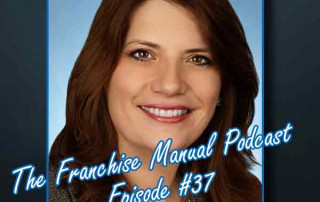
Financial Performance Representation (Item 19) – The Franchise Manual Podcast – Episode #37

By |May 15th, 2026|Franchise Law, Franchising Basics, Podcast, Q&A|Comments Off on Financial Performance Representation (Item 19) – The Franchise Manual Podcast – Episode #37

My Podner in this episode is Cheryl Mullin and she’s going to talk with us today about Financial Performance Representation! Man, if that doesn’t make you salivate then you are no franchisor in my books. This can be a very dense topic but I am confident that Ms. Cheryl help us demystify this topic and maybe even help us pull our heads out from underneath the covers every time it is mentioned. But who knows, she may even have us running for the hills even faster.


Cheryl Mullin is the founding partner of Mullin, PC. Her practice focuses on assisting commercial clients to achieve their growth objectives through franchising, joint ventures, acquisition, and private investment.

She also provides intellectual property protection services to small and mid-size enterprises, business transition planning services for closely-held businesses, and commercial litigation support on business issues.

Cheryl earned her J.D. from Widener University School of Law in 1995, and her LL.M , which is a graduate taxation program from Southern Methodist University’s Dedman School of Law in 2013.

She is ranked by Chambers and Partners for her work in franchise law (since 2020), is recognized for her work in franchising by International Who’s Who of Franchise Lawyers (since 2013), Texas Super Lawyers (since 2012), and Best Lawyers in America (since 2007). Cheryl also has been recognized since 2007 by “D” Magazine as one of the best lawyers in Dallas, and by Franchise Times magazine since 2004 as a “Legal Eagle.” Cheryl lectures frequently on corporate and franchise-related topics and is AV-rated by Martindale-Hubbell.

Today, Cheryl is based in her, Pennsylvania office, and splits her time with the Dallas, Texas office.

Time Stamps
Cheryl Mullin Intro 00:00:30
Segment 1 00:02:46
Get to know Cheryl Mullin
Segment 2 00:20:21
Topic Segment – The Franchise Expo
Segment 3 00:57:45
Quickdraw Questions

Topics Discussed in this Episode

  1. Why the FDD exists: history from UFOC to FDD, FTC rule (1979), NASAA’s role, 2008 FTC update.
  2. What a Financial Performance Representation (FPR) is under Item 19 (formal definition vs. “how much can a franchisee make?”).
  3. Rule that any financial performance info must be in Item 19 (oral, written, or visual).
  4. Historical vs. projected numbers in FPRs and that both are allowed with different rules.
  5. FPRs are optional: you can leave Item 19 blank with a negative statement.
  6. Why many franchisors now include FPRs (prospects need numbers for a major investment).
  7. Legitimate reasons not to include an FPR:
    • Weak or unflattering numbers
    • No reliable sales data (e.g., flat royalty, no POS)
    • Units too new
    • Very mature or unique flagship store whose results don’t translate
    • Territorial and online differences between franchisor and franchisees
  8. Risks of DIY FDDs and why non-lawyers often mis-handle Item 19.
  9. High-level overview of how FPRs are presented(averages, medians, ranges, percentages; special NASAA rules in registration states).

Cheryl Mullin
Mullin Law PC
cheryl.mullin@mullinlawpc.com
www.mullinlawpc.com
972-852-1703

Kit Vinson
www.franman.net
kit.vinson@franman.net
214-736-3939 x 101

Find this podcast on:

4 05, 2026

How Do I Choose the Right Franchise Attorney (Q&A Guide)

By |May 4th, 2026|Blog, Franchise Development, Q&A|Comments Off on How Do I Choose the Right Franchise Attorney (Q&A Guide)

Cartoon Image of franchise attorneyChoosing the right franchise attorney is one of the most important decisions a prospective franchisor will make. Franchise law is highly specialized, and working with the wrong attorney can lead to compliance issues, unnecessary costs, and long-term problems within the franchise system.

Q: Why do I need a franchise attorney instead of a general business attorney?

A: Franchise law is a specialized area that involves federal regulations, state laws, disclosure requirements, and ongoing compliance obligations. A general business attorney may not be familiar with franchise-specific rules, which can result in incomplete or noncompliant documents. A franchise attorney understands the legal framework required to legally offer and sell franchises.

Q: When should I hire a franchise attorney?

A: A franchise attorney should be one of the first professionals you hire when considering franchising. Early legal guidance can help you avoid mistakes, determine whether your business model qualifies as a franchise, and outline the proper steps for moving forward.

Q: What qualifications should I look for in a franchise attorney?

A: Look for an attorney who focuses primarily on franchise law and has experience working with startup franchisors. Many qualified franchise attorneys are members of the American Bar Association Forum on Franchising. Experience, reputation, and a clear understanding of franchise regulations are critical.

Q: What questions should I ask during an initial consultation?

A: You should ask whether the attorney specializes in franchise law, how many franchise systems they have helped launch, who will actually work on your documents, and whether they can provide client references. It is also important to understand how accessible they will be and how communication will be handled.

Q: How important is communication style when choosing a franchise attorney?

A: Communication is very important. A good franchise attorney should be able to explain complex legal concepts in plain language. If you cannot easily understand the answers to your questions, it may be difficult to work effectively together throughout the franchising process.

Q: How should a franchise attorney charge for their services?

A: Many franchise attorneys offer flat fees or clearly defined pricing ranges for preparing franchise documents. Transparency in pricing helps you budget appropriately and avoid unexpected costs. It is important to understand what services are included and whether additional fees may apply.

Final Thoughts

Selecting the right franchise attorney helps establish a strong legal foundation for your franchise system. The right advisor will guide you through compliance, document preparation, and ongoing obligations while helping you avoid costly mistakes. In the next article, we will explain what the Franchise Disclosure Document is and why it is required before offering franchises.


Taken from episode 27 of The Franchise Manual Podcast with Kit Vinson, owner of FranMan. This blog series is designed to give you clear, practical answers to common franchise questions. In this episode, Kit interviews Rob Vinson, an experienced franchise attorney, who outlines the legal steps required to franchise a business properly and compliantly. Enjoy the Q&A below, listen to the full podcast, or both. You can find episode 27 at the link below.

The Franchise Manual Podcast – Episode #27 – Franchising 101

20 04, 2026

Why Franchise Instead of Opening More Company-Owned Locations (Q&A Guide)

By |April 20th, 2026|Blog, Franchise Development, Q&A|Comments Off on Why Franchise Instead of Opening More Company-Owned Locations (Q&A Guide)

Why Franchise Instead of Opening More Company-Owned Locations Business owners who are ready to expand are often faced with two choices. They can grow by opening additional company-owned locations or they can franchise their business. Franchising is a strategic way to grow a brand without carrying all of the financial risk alone. Below are some of the reasons business owners choose franchising as their growth model.

Q: Why would a business franchise instead of opening more company-owned units?

A: Franchising allows a business to grow faster using less of its own capital. Instead of the company paying for every new location, franchisees invest their own money to open and operate locations under the brand. This reduces the financial burden on the franchisor while still allowing the brand to expand into new markets.

Q: How does franchising reduce financial risk?

A: When a business owner opens a company-owned location, they are fully responsible for the costs of real estate, equipment, inventory, staffing, and overhead. In franchising, those expenses are paid by the franchisee. Because franchisees invest their own capital, the franchisor avoids debt and limits its financial exposure while still benefiting from royalties based on franchisee revenue.

Q: Do franchisees perform better than managers of company-owned locations?

A: In many cases, yes. Franchisees have a personal investment in the success of their business, which often leads to better management, customer service, and profitability. Unlike hired managers, franchisees are motivated by ownership, not just a salary. They are more likely to follow systems, control costs, and build strong customer relationships.

Q: Does franchising make it easier to grow outside of my local area?

A: Yes. Franchising allows companies to expand into new cities, regions, or states without needing a large corporate infrastructure. Franchisees provide local presence and market knowledge, helping the brand adapt to regional needs while maintaining consistent standards.

Q: Are there any other advantages to franchising?

A: Franchising can increase brand awareness, market penetration, and buying power. It creates a network of business owners who share best practices, increasing innovation and operational efficiency. Franchise systems often benefit from economies of scale in areas such as marketing, technology, and supplier pricing.

Q: Does franchising eliminate risk completely?

A: No business model eliminates risk, but franchising shifts much of the financial and operational risk to franchisees. However, the franchisor still has legal and brand responsibilities. Strong systems, training, and franchisee support are essential for success.

Final Thoughts

Franchising is a powerful growth strategy that allows business owners to expand faster with less capital and reduced risk. It provides motivated owner-operators, increases market reach, and strengthens brand value through shared success. In the next article, we will explore what types of businesses can be franchised and which ones may not be a good fit for franchising.


Taken from episode 27 of The Franchise Manual Podcast with Kit Vinson, owner of FranMan. This blog series is designed to give you clear, practical answers to common franchise questions. In this episode, Kit interviews Rob Vinson, an experienced franchise attorney, who outlines the legal steps required to franchise a business properly and compliantly. Enjoy the Q&A below, listen to the full podcast, or both. You can find episode 27 at the link below.

The Franchise Manual Podcast – Episode #27 – Franchising 101

9 04, 2026

What Legal Steps Are Required to Franchise a Business (Q&A Guide)

By |April 9th, 2026|Blog, Franchise Development, Q&A|Comments Off on What Legal Steps Are Required to Franchise a Business (Q&A Guide)

What Legal Steps Are Required to Franchise a Business
(Q&A Guide)

Franchising a business involves more than simply offering others the right to use your brand. It requires careful legal preparation, proper documentation, and ongoing compliance with federal and state franchise laws. Understanding the required steps helps business owners avoid costly mistakes and launch their franchise system the right way.

Q: What is the first legal step to franchising a business?

A: One of the first steps is determining whether your business legally qualifies as a franchise. This involves analyzing trademark use, the level of control or assistance provided, and whether fees are being charged. A franchise attorney can help evaluate this early to ensure the correct path forward.

Q: Do I need to protect my brand before franchising?

A: Yes. Protecting your brand is critical. Franchisors should conduct a trademark search and begin the trademark registration process before offering franchises. This helps ensure the brand can be legally licensed to franchisees and avoids the risk of rebranding later.

Q: What legal documents are required to franchise a business?

A: The two primary documents are the Franchise Disclosure Document and the franchise agreement. The FDD provides required disclosures to prospective franchisees, while the franchise agreement establishes the legal relationship between the franchisor and franchisee once a franchise is sold.

Q: Are there state-specific requirements for franchising?

A: Yes. In addition to federal regulations, many states have their own franchise laws. Some states require franchisors to register their FDD before offering or selling franchises. Others impose additional disclosure or filing requirements. Franchisors must comply with both federal and applicable state laws.

Q: Do franchise documents need to be updated?

A: Yes. Franchise Disclosure Documents must be updated annually and whenever there are material changes to the franchise system. State registrations also require renewal. Ongoing compliance is an essential part of operating a franchise system.

Q: Can franchisors handle these legal steps on their own?

A: While it is possible to prepare franchise documents without professional help, it is risky. Franchise laws are complex, and mistakes can lead to enforcement actions, lawsuits, and financial penalties. Working with experienced franchise professionals helps ensure compliance and long-term stability.

Final Thoughts

Franchising a business requires careful planning, proper documentation, and ongoing legal compliance. Taking the correct legal steps protects both the franchisor and franchisees and sets the foundation for sustainable growth. With the right team and preparation, franchising can be a powerful and rewarding expansion strategy.

Taken from episode 27 of The Franchise Manual Podcast with Kit Vinson, owner of FranMan. This blog series is designed to give you clear, practical answers to common franchise questions. In this episode, Kit interviews Rob Vinson, an experienced franchise attorney, who outlines the legal steps required to franchise a business properly and compliantly. Enjoy the Q&A below, listen to the full podcast, or both. You can find episode 27 at the link below.

The Franchise Manual Podcast – Episode #27 – Franchising 101

2 04, 2026

What Is a Franchise Operations Manual and Why Does It Matter (Q&A Guide)

By |April 2nd, 2026|Blog, Franchise Development, Q&A|Comments Off on What Is a Franchise Operations Manual and Why Does It Matter (Q&A Guide)

Franchise Operations Manual A franchise operations manual is one of the most important tools a franchisor provides to franchisees. While the franchise agreement defines the legal relationship, the operations manual explains how the business is actually run on a day to day basis.

Q: What is a franchise operations manual?

A: A franchise operations manual is a comprehensive guide that documents the franchisor’s system standards, procedures, and best practices. It provides franchisees with detailed instructions on how to operate the business consistently and in compliance with brand requirements.

Q: Why is an operations manual important in franchising?

A: Franchising depends on consistency across locations. The operations manual ensures that each franchise location operates the same way, delivers a consistent customer experience, and follows approved processes. This protects the brand and supports franchisee success.

Q: What types of information are included in an operations manual?

A: Operations manuals typically include topics such as daily operations, customer service standards, staffing and training procedures, marketing guidelines, quality control, approved suppliers, technology systems, safety protocols, and reporting requirements.

Q: How does the operations manual relate to the franchise agreement?

A: The franchise agreement sets out the franchisee’s obligation to comply with system standards, while the operations manual contains the details of those standards. This structure allows franchisors to update procedures without renegotiating franchise agreements.

Q: Can the operations manual be updated?

A: Yes. One of the key advantages of an operations manual is that it can be updated as the business evolves. Franchisors can refine processes, introduce new systems, and respond to market changes while maintaining consistency across the franchise network.

Q: What role does the operations manual play in training?

A: The operations manual is a core training tool. It supports initial franchisee training and serves as an ongoing reference for franchisees, managers, and staff. Well documented manuals reduce confusion, improve performance, and reduce the need for constant franchisor intervention.

Final Thoughts

The franchise operations manual is the backbone of a franchise system. It transforms a successful business into a repeatable model that can be taught, supported, and scaled. In the final article of this series, we will review the legal steps required to franchise a business and bring all of these concepts together.


Taken from episode 27 of The Franchise Manual Podcast with Kit Vinson, owner of FranMan. This blog series is designed to give you clear, practical answers to common franchise questions. In this episode, Kit interviews Rob Vinson, an experienced franchise attorney, who explains why the franchise operations manual is a critical component of a successful franchise system. Enjoy the Q&A below, listen to the full podcast, or both. You can find episode 27 at the link below.

The Franchise Manual Podcast – Episode #27 – Franchising 101

31 03, 2026

Why You Should Not Copy Someone Else’s Franchise Disclosure Document (Q&A Guide)

By |March 31st, 2026|Blog, Franchise Development, Q&A|Comments Off on Why You Should Not Copy Someone Else’s Franchise Disclosure Document (Q&A Guide)

Some prospective franchisors look for shortcuts when preparing their franchise documents. One common mistake is copying or borrowing another company’s Franchise Disclosure Document as a template. While this may seem like a cost-saving approach, it often leads to compliance issues and long-term problems.

Q: Is it legal to copy another company’s Franchise Disclosure Document?

A: While it may be possible to use another FDD as a reference, copying an FDD directly is risky and often inappropriate. Each Franchise Disclosure Document must accurately reflect the specific facts, business model, and legal history of the franchisor. Using another company’s document can result in inaccurate or misleading disclosures.

Q: Why does an FDD need to be customized?

A: Franchise disclosure laws require franchisors to disclose information that is unique to their business. This includes ownership structure, management experience, fees, training programs, territory rights, and financial statements. A copied FDD is unlikely to match these details, which can lead to violations of franchise law.

Q: What are the risks of using a copied FDD?

A: The risks include regulatory penalties, lawsuits from franchisees, rescission rights that require refunding franchise fees, and delays or denials during state franchise registration. A poorly drafted or inaccurate FDD can also damage credibility with prospective franchisees.

Q: Can copying an FDD affect the franchise agreement as well?

A: Yes. The Franchise Disclosure Document and the franchise agreement must align. If the FDD describes terms that do not match the franchise agreement, it can create confusion and legal exposure. Copying documents from another system often results in inconsistencies between disclosure and contractual obligations.

Q: Why is professional preparation of franchise documents important?

A: Franchise attorneys tailor franchise documents to the specific needs, goals, and structure of each business. Properly prepared documents help protect the franchisor, ensure compliance, and create a clear framework for the franchise relationship. This reduces risk and supports long-term system stability.

Final Thoughts

Copying another company’s Franchise Disclosure Document may seem like a shortcut, but it often leads to costly consequences. Franchise documents must be accurate, compliant, and customized to the specific franchise system. In the next article, we will discuss the role of the franchise operations manual and why it is critical to franchise success.


This if from episode 27 of The Franchise Manual Podcast with Kit Vinson, owner of FranMan. This blog series is designed to give you clear, practical answers to common franchise questions. In this episode, Kit interviews Rob Vinson, an experienced franchise attorney, who explains why copying another company’s Franchise Disclosure Document can create serious legal and financial risks. Enjoy the Q&A below, listen to the full podcast, or both. You can find episode 27 at the link below.

The Franchise Manual Podcast – Episode #27 – Franchising 101

27 03, 2026

What Is the Franchise Disclosure Document (Q&A Guide)

By |March 27th, 2026|Blog, Franchise Development, Q&A|Comments Off on What Is the Franchise Disclosure Document (Q&A Guide)

Before a franchise can be legally offered or sold, the franchisor must provide prospective franchisees with a document known as the Franchise Disclosure Document, commonly referred to as the FDD. This document plays a critical role in franchise compliance and transparency.

Q: What is the Franchise Disclosure Document?

A: The Franchise Disclosure Document is a legally required document that provides prospective franchisees with detailed information about the franchise system before they invest. It is designed to help franchise buyers make informed decisions by clearly disclosing risks, costs, and obligations.

Q: Why is the FDD required?

A: The FDD is required under federal law to protect franchise buyers from misleading or incomplete information. It ensures that franchisors disclose important facts about their business, financial condition, legal history, and franchise system before any agreement is signed or money is paid.

Q: When must the FDD be given to a prospective franchisee?

A: The FDD must be provided at least fourteen calendar days before a franchisee signs any agreement or pays any money. This waiting period allows prospective franchisees time to review the document carefully and seek professional advice if needed.

Q: What kind of information is included in the FDD?

A: The FDD includes information such as the franchisor’s business background, litigation and bankruptcy history, fees and costs, estimated initial investment, franchisee obligations, territory rights, training and support, financial performance representations if provided, and financial statements.

Q: How many sections are in the FDD?

A: The FDD contains twenty three specific disclosure items required by law. Each item addresses a different aspect of the franchise relationship and must follow a standardized format.

Q: Does the FDD replace the franchise agreement?

A: No. The FDD is a disclosure document, not a contract. It explains the franchise relationship but does not create it. The franchise agreement is the binding contract that governs the legal relationship after the franchise is sold.

Final Thoughts

The Franchise Disclosure Document is the foundation of franchise transparency and compliance. It protects franchise buyers and helps establish trust in the franchise system. Understanding what the FDD is and how it works is essential for anyone considering franchising. In the next article, we will discuss why copying another company’s FDD can create serious legal and business risks.


Taken from episode 27 of The Franchise Manual Podcast with Kit Vinson, owner of FranMan. This blog series is designed to give you clear, practical answers to common franchise questions. In this episode, Kit interviews Rob Vinson, an experienced franchise attorney, who explains what the Franchise Disclosure Document is and why it is required when franchising a business. Enjoy the Q&A below, listen to the full podcast, or both. You can find episode 27 at the link below.

The Franchise Manual Podcast – Episode #27 – Franchising 101

21 03, 2026

Understanding the Importance of Franchise Operations Manuals

By |March 21st, 2026|Blog, Franchise Development, Franchise Operating Manual, Q&A|Comments Off on Understanding the Importance of Franchise Operations Manuals

The Strategic Importance of Franchise Operations Manuals

Imagine teaching someone a thousand miles away how to run your business without ever meeting them. To succeed, you must capture your “Business DNA”—the genetic code that dictates everything from brewing temperatures to hiring staff. In the industry, this replicable blueprint is the franchise operations manual.

Consider why a Big Mac tastes identical in New York and Tokyo; the instructions never vary. This documentation ensures brand consistency, allowing companies to master scaling business models through franchising without reinventing the wheel for every new location.

Ultimately, this shift from relying on memory to written systems creates freedom. By documenting operations, the manual transforms a demanding job into a scalable asset, ensuring the company thrives even when the owner isn’t in the room.

The Four Pillars of the ‘Business Recipe’: What Goes Inside an Operations Manual

Just like a master chef’s cookbook contains more than just a list of ingredients, a robust franchise operations manual template must cover every distinct flavor of the business. It isn’t enough to say “make a burger”; the guide needs to explain how to greet the customer, how to clean the grill, and how to count the cash at night. This document functions as the central brain of the franchise, ensuring that nothing is left to guesswork or individual interpretation.

Most manuals divide the business into five essential categories to keep information organized:

  • Start-up: finding, building and outfitting your site
  • Personnel: Guidelines for hiring, training, and managing staff behavior.
  • Daily Operations: Step-by-step workflows for the core product or service.
  • Marketing: Standards for using the logo, running ads, and social media.
  • Administration: Back-office systems for accounting, software, and reporting.

Within these sections, you will find the Standard Operating Procedures (SOPs). These are the specific, granular instructions that tell an employee exactly how to perform a task without needing a manager present. What to include in franchise SOPs goes far beyond general advice; it dictates the exact water temperature for washing dishes or the precise script used when answering the phone. This level of detail transforms a chaotic environment into a predictable machine.

Documenting these daily operational workflows for staff does more than just organize the day; it protects the brand’s reputation. If every location follows the same standard operating procedures for franchisees, customers get the same experience every time. Without this strict adherence to the recipe, you risk the operational equivalent of a burnt pizza—a bad experience that ruins the appetite for the whole brand.

Stopping the ‘Burnt Pizza Problem’: Why Every Franchisee Needs a Strict Rulebook

When a loyal customer visits your favorite coffee chain in a new city, only to be served a cold, bitter drink, the damage is immediate. You probably won’t just blame that specific barista; you might hesitate to visit any of their locations again. This scenario highlights the immense challenge of maintaining brand consistency across locations. Without a central authority dictating exactly how products are made and customers are treated, a single poorly managed store can tarnish the reputation of hundreds of excellent ones. The operations manual serves as the primary defense against this inconsistency, ensuring that the customer experience remains identical whether they are in Boston or Bangkok.

To prevent these lapses, the manual functions less like a suggestion box and more like a strict referee. Just as a referee ensures fairness by enforcing the same rules for every player, the manual provides quality control for multi-unit operators by establishing non-negotiable standards. It removes personal opinion from the equation; if a franchisee decides to change the cleaning schedule or the recipe, they aren’t just being creative—they are breaking the rules of the game. This document allows the franchisor to audit locations objectively, pointing to specific page numbers when standards fall short rather than relying on vague, subjective feedback.

Beyond simply keeping customers happy, this strict adherence creates a crucial safety net for the business owners. Clear documentation simplifies franchisee compliance and legal requirements by proving that safety protocols, food handling standards, and labor laws were communicated clearly from day one. When everyone follows the exact same script, the business becomes a stable asset rather than a risky gamble. However, writing these distinct processes down does more than just enforce rules; it creates a tangible asset that requires its own form of protection.

Protecting Your Ideas and Your Sanity: How Manuals Secure Your Intellectual Property

While many equate a brand’s value with its logo, the real worth lies in the unique methods used to operate behind the scenes. This “secret sauce”—whether it’s a specific way to marinate chicken or a streamlined workflow for handling returns—is exactly what you are selling to a franchisee. By documenting these proprietary business systems in a formal manual, you convert vague ideas into tangible, legally protected Intellectual Property (IP). Without this detailed documentation, your unique methods are merely habits rather than assets, making protecting intellectual property in franchising nearly impossible if a competitor tries to copy your success.

Distinguishing this document from other legal paperwork is crucial. While the franchise agreement vs training guides might seem similar, they serve opposite functions: the agreement acts as the binding contract (the “what”), while the operations manual serves as the instructional textbook (the “how”). Furthermore, selling a franchise isn’t just about handing over keys; strict regulations often mandate that you disclose the existence of these systems. Meeting basic Franchise Disclosure Document (FDD) requirements means proving you actually have a replicable system ready for new owners to use.

Beyond just satisfying regulators, a well-maintained manual provides three distinct layers of security for the brand:

  1. IP Protection: It legally defines and claims ownership of your trade secrets.
  2. Compliance Evidence: It proves you provided the necessary instructions if a legal dispute arises.
  3. Training Verification: It creates a clear standard to measure franchisee performance against.

Keeping this document alive requires updating proprietary business systems regularly, ensuring your protection evolves with the market. With your legal foundation secure, the only remaining step is constructing the actual guides.

Building Your Scaling Blueprint: The Step-by-Step Path to Business Freedom

The true power of a system changes how you view business growth. It isn’t just about rules; it’s about freedom. Consider Sarah, a shop owner who finally documented her “Business DNA.” When she opened her second location, she didn’t have to be there at 5 AM to train the new staff herself. Her manual provided the franchisor support and training systems needed to ensure the coffee tasted perfect, allowing her to focus on strategy while the store ran smoothly without her.

You don’t need to be a corporate giant to start building this freedom. Learning how to create a comprehensive franchise operations manual begins with three simple steps:

  1. Audit Current Tasks: Identify the repetitive questions staff ask daily and flag where consistency fails.
  2. Document the ‘Gold Standard’: Write down the exact steps for a perfect result, treating it like a detailed recipe.
  3. Choose a Digital Platform: Embrace modern efficiency by choosing accessible digital vs paper franchise documentation.

Whether you are onboarding new franchise owners or just trying to take a vacation, a solid manual is your safety net. It transforms your business from a job that requires your constant presence into a machine that runs itself. By capturing your knowledge today, you stop being the player and finally become the coach.

1 02, 2026

Best Franchises to Own

By |February 1st, 2026|Blog, Franchise Development|Comments Off on Best Franchises to Own

EvEvery time you drive past a packed UPS Store, you aren’t just looking at a successful storefront—you’re observing a carefully engineered system. Operators of the best franchises own a completely proven playbook rather than just a brand name. When weighing the risks of franchising vs starting independent business ventures, the massive fear of the unknown paralyzes many aspiring entrepreneurs.

Fortunately, industry data reveals a comforting reality: roughly 90% of franchised locations stay open after two years. Think of this model as buying an award-winning recipe instead of inventing a gourmet meal from scratch. Purchasing a “business in a box” completely removes the terrifying guesswork of building a brand from zero, providing a safety net for your life savings.

Finding the best franchises to buy ultimately depends on honest self-reflection. Do you thrive by following a tested blueprint, or are you a rebellious creator who demands total control?

The “Big Three” Numbers: How Much Money Do You Actually Need to Start?

Most assume buying a business just means paying a one-time entry fee. In reality, franchisors evaluate three numbers to ensure you survive opening day. First is your Net Worth—the total value of everything you own minus your debts. Next are the liquid capital requirements for franchises, meaning the actual cash you have easily available right now. Finally, the Total Initial Investment covers the franchise fee plus setup costs like equipment and early marketing.

Deciding what is the best franchise business to start depends heavily on your comfort with these figures. Consider how drastically costs vary between industries:

  • Commercial Cleaning (Service): $30k Liquid, $50k Net Worth, $45k Total Investment.
  • Burger Chain (Fast-Food): $500k Liquid, $1M Net Worth, $1.5M Total Investment.

If fast food is financially out of reach, profitable low-investment opportunities exist for under $50,000.

Low-Cost Opportunities: Profitable Franchises for Under $50,000

Many people assume running a business requires signing a commercial lease, but the cheapest franchises to start skip the storefront entirely. By operating a service out of your house or a branded vehicle, you completely eliminate rent and expensive physical builds. Because overhead is drastically reduced, these low-cost franchise opportunities often reach their break-even point—the moment your revenue finally covers your expenses—much faster than traditional retail locations.

This smaller financial entry requires a clear trade-off: you will likely be doing the daily labor yourself instead of managing a large staff from behind a desk. Even with that necessary “sweat equity,” some of the top-rated home-based franchise opportunities offer incredibly high profit margins:

  • Commercial cleaning and janitorial contracts
  • Mobile pet grooming and care
  • Residential home maintenance and repair
  • Digital travel planning (sometimes operating as a creative franchise under $5,000 in the USA)

Affordability makes these service-based models highly accessible, but low startup costs aren’t the only metric to consider before signing a contract. If you are going to invest your time and savings, you need to offer a service your community will always buy. Certain industries inherently stay profitable even when the economy slows.

Recession-Proof Picks: Which Industries Stay Profitable During Economic Slowdowns?

Economic downturns force consumers to tighten budgets, making the difference between a “want” and a “need” critical. Families quickly cut discretionary spending like luxury fitness memberships. Therefore, the best franchises to buy are anchored in essential services. These recession-proof franchise business models thrive by providing vital, everyday solutions regardless of stock market fluctuations.

This reality explains why specific sectors grow during financial dips. Consider automotive repair. When money gets tight, people fix their aging vehicles rather than purchase new ones, driving steady traffic to mechanic shops. Similarly, senior care remains untouched by recessions because looking after aging relatives is non-negotiable. These necessary services often become the highest profit franchises by avoiding the boom-and-bust cycles of trendy concepts.

Securing a business with consistent cash flow brings peace of mind, but picking an essential service is just step one. Ongoing costs and territory protections represent the next critical phase of evaluation.

Beyond the Buy-In: Understanding Royalties and the “Neighborhood Fence”

Getting your doors open is just the beginning; the ongoing franchisor relationship keeps them that way. Think of monthly payments as a business subscription service. Having franchise royalties and fees explained reveals that these costs, including mandatory advertising fund contributions, aren’t hidden taxes. Instead, they pool resources so your local shop benefits from million-dollar national marketing campaigns that an independent owner could never afford.

Protection from internal competition is another vital ongoing benefit known as territory rights, acting as your “neighborhood fence.” This legal boundary guarantees the corporate office won’t open a sibling location next door to steal your customers. Grasping this concept is vital when considering multi-unit vs single-unit ownership, as securing multiple locations lets you lock down a much larger protective footprint.

Verifying these boundaries and recurring costs requires digging into the brand’s paperwork. Determining if the support justifies the price tag means mastering the Franchise Disclosure Document (FDD).

The Ultimate Vetting Checklist: How to Read a Franchise Disclosure Document (FDD)

Before you hand over your savings, the government requires brands to provide a massive rulebook called the Franchise Disclosure Document (FDD). This paperwork lays out all franchise disclosure document requirements, acting as your ultimate truth serum against slick sales pitches.

Digging through hundreds of pages sounds exhausting, so focus your vetting process for potential franchisees on this three-step checklist:

  • Look at Item 19 to see how much money locations actually make.
  • Check Item 20 for red flags, like high store closure rates.
  • Contact at least three current owners to ask about their reality.

That first step, Item 19, reveals the Average Unit Volume (AUV)—a fancy term meaning the average sales for one single location. This number serves as the baseline for evaluating franchise agreements, but financial charts only tell half the story. The real secret is picking up the phone to ask existing franchisees if they would buy into the system again today.

Getting honest answers from people already running the business gives you the confidence to finally take action and transition from curious observer to active owner.

Your First 90 Days: From “Curious” to “Owner” Without the Overwhelm

You no longer have to wonder how to buy a franchise with no experience. You understand the financial basics and the reality of running a proven brand. Your research phase is ending, and the active vetting process is ready to begin.

Take your first steps by determining your actual liquid budget, picking a recession-proof industry, and requesting your first Franchise Disclosure Document. Finding what franchise is the easiest to own depends entirely on matching these factors to your specific lifestyle. If those FDD numbers align with your goals, your journey culminates at Discovery Day. This is the final mutual interview where you visit corporate headquarters to meet the leadership team face-to-face.

The best franchises to buy are those that protect your financial future while respecting your time. As you move forward, remember the ultimate rule: don’t buy a job, buy a system that works for you.

Go to Top