
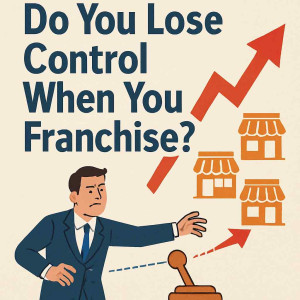
 One of the most common objections to franchising is this. Business owners believe that if they franchise, they will lose control of their business. Jim sees it differently.
Q: Is it true that you lose control when you franchise?
This is one of the biggest myths in franchising. Many business owners assume that bringing in franchisees means giving up control. In reality, the dynamic often shifts in the opposite direction. Franchising changes the type of control you have, not whether you have it.
Q: Why do people believe they will lose control?
Because they are comparing franchisees to employees. In a company-owned model, you hire people, give them direction, and if they do not perform, you replace them. That creates a sense of direct authority and control. Franchisees are different. They are independent business owners, and that independence can feel like a loss of control at first.
Q: How does the level of control actually compare?
In many ways, you have more leverage with a franchisee than with an employee. An employee risks losing a paycheck. If they leave or are terminated, their primary concern is replacing their income. A franchisee risks much more. They have invested capital, time, and effort into the business. Their livelihood, and often their family’s financial future, is tied to the success of that location. That creates a much stronger incentive to follow the system and protect the brand.
Q: What happens when a franchisee does not follow the system?
There are still consequences, and they are significant. If a franchisee fails to meet the standards of the brand, they risk losing their entire investment, not just a job. That level of accountability creates a different kind of relationship and a different level of commitment. Because of what is at stake, franchisees are often highly motivated to align with the system.
Q: Does this mean franchising is easier to manage than employees?
Not necessarily. It is different. You are no longer managing day-to-day behavior in the same way. Instead, you are managing through systems, standards, and relationships. Control comes from clarity, consistency, and the strength of your operating model, not from direct supervision.
Q: What is the biggest takeaway about control in franchising?
Franchising does not eliminate control. It changes how control is exercised. Instead of relying on authority, you rely on alignment, incentives, and shared goals. When franchisees have their own investment at stake, their motivation to succeed often exceeds that of an employee. For many franchisors, that creates a stronger and more scalable form of control.
In the next post, we will explore why franchising is not just a business model but a long-term relationship, and what it takes to build successful partnerships within a franchise system.

