
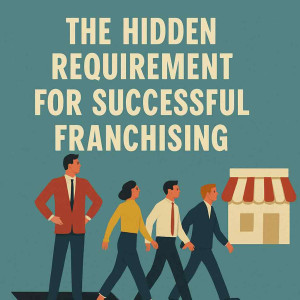
 After understanding the risks of franchising too early, the conversation shifts to something many business owners overlook. It is not just about whether your business is ready. It is about whether you are ready.
Q: What should a business owner evaluate personally before franchising?
You need to understand your leadership style. Franchising is not just about systems and processes. It is about relationships. When you franchise, you are no longer managing employees. You are working with independent business owners. That requires a different approach to leadership.
Q: What are the key leadership styles to consider?
At a high level, it comes down to command-and-control versus collaborative leadership. Some business owners are used to giving direction and expecting it to be followed without question. Their success may have come from having all the answers and driving execution personally. Others operate in a more collaborative way, where they seek input, listen to feedback, and adjust based on what they learn. Franchising tends to work better in environments where collaboration is valued.
Q: Why doesn’t a command-and-control style work well in franchising?
Because franchisees are not employees. They are independent operators who have invested their own money, time, and energy into the business. They are not going to respond the same way an employee would. If a franchisor tries to lead purely through authority, it can create friction, reduce trust, and limit the effectiveness of the relationship. Franchising requires influence, not just control.
Q: Can tools like personality assessments help in franchising?
They can be helpful, especially in understanding both yourself and others. Some organizations use personality profiling to identify cultural fit or to better understand how people communicate and make decisions. However, the real value is not just in identifying a style. It is in being willing to adapt.
Q: Why is flexibility important for franchisors?
Because every franchisee is different. You will work with people who think differently, communicate differently, and approach business differently than you do. If you expect everyone to operate exactly like you, you will struggle. Successful franchisors understand their own tendencies but adjust their approach based on the situation and the person. That flexibility is what allows strong relationships to develop across the system.
Q: What is the biggest takeaway about leadership and franchising?
Franchising is a people business. Your ability to build, manage, and maintain relationships with franchisees will have a direct impact on the success of your system. It is not enough to have a strong business model. You need a leadership style that supports partnership, communication, and mutual respect.
In the next post, we will address one of the most common objections to franchising. The belief that you lose control. Jim explains why the opposite is often true.
Join us for this excerpt from episode 9 of The Franchise Manual Podcast with Kit Vinson, owner of FranMan Franchise Manuals. This blog series is designed to give you clear, practical answers to common franchise questions. In this episode, Kit interviews Jim Richardson, franchise veteran with more than 35 years of experience, who held leadership roles at big names like Pizza Hut and Panda Express and helped scale thousands of locations across multiple markets.
Enjoy the Q&A below, listen to the full podcast, or do both. You can find episode 9 at the link below.
The Franchise Manual Podcast – Episode #9 – Franchising as a Partnership
This blog series is designed to give you clear, practical answers to common franchise questions. In this episode, Kit interviews Jim Richardson, a 35-year franchise veteran who held leadership roles at Pizza Hut and Panda Express and helped scale thousands of locations across multiple markets.

