Blog

1 02, 2026

Best Franchises to Own

By |February 1st, 2026|Blog, Franchise Development|Comments Off on Best Franchises to Own

EvEvery time you drive past a packed UPS Store, you aren’t just looking at a successful storefront—you’re observing a carefully engineered system. Operators of the best franchises own a completely proven playbook rather than just a brand name. When weighing the risks of franchising vs starting independent business ventures, the massive fear of the unknown paralyzes many aspiring entrepreneurs.

Fortunately, industry data reveals a comforting reality: roughly 90% of franchised locations stay open after two years. Think of this model as buying an award-winning recipe instead of inventing a gourmet meal from scratch. Purchasing a “business in a box” completely removes the terrifying guesswork of building a brand from zero, providing a safety net for your life savings.

Finding the best franchises to buy ultimately depends on honest self-reflection. Do you thrive by following a tested blueprint, or are you a rebellious creator who demands total control?

The “Big Three” Numbers: How Much Money Do You Actually Need to Start?

Most assume buying a business just means paying a one-time entry fee. In reality, franchisors evaluate three numbers to ensure you survive opening day. First is your Net Worth—the total value of everything you own minus your debts. Next are the liquid capital requirements for franchises, meaning the actual cash you have easily available right now. Finally, the Total Initial Investment covers the franchise fee plus setup costs like equipment and early marketing.

Deciding what is the best franchise business to start depends heavily on your comfort with these figures. Consider how drastically costs vary between industries:

  • Commercial Cleaning (Service): $30k Liquid, $50k Net Worth, $45k Total Investment.
  • Burger Chain (Fast-Food): $500k Liquid, $1M Net Worth, $1.5M Total Investment.

If fast food is financially out of reach, profitable low-investment opportunities exist for under $50,000.

Low-Cost Opportunities: Profitable Franchises for Under $50,000

Many people assume running a business requires signing a commercial lease, but the cheapest franchises to start skip the storefront entirely. By operating a service out of your house or a branded vehicle, you completely eliminate rent and expensive physical builds. Because overhead is drastically reduced, these low-cost franchise opportunities often reach their break-even point—the moment your revenue finally covers your expenses—much faster than traditional retail locations.

This smaller financial entry requires a clear trade-off: you will likely be doing the daily labor yourself instead of managing a large staff from behind a desk. Even with that necessary “sweat equity,” some of the top-rated home-based franchise opportunities offer incredibly high profit margins:

  • Commercial cleaning and janitorial contracts
  • Mobile pet grooming and care
  • Residential home maintenance and repair
  • Digital travel planning (sometimes operating as a creative franchise under $5,000 in the USA)

Affordability makes these service-based models highly accessible, but low startup costs aren’t the only metric to consider before signing a contract. If you are going to invest your time and savings, you need to offer a service your community will always buy. Certain industries inherently stay profitable even when the economy slows.

Recession-Proof Picks: Which Industries Stay Profitable During Economic Slowdowns?

Economic downturns force consumers to tighten budgets, making the difference between a “want” and a “need” critical. Families quickly cut discretionary spending like luxury fitness memberships. Therefore, the best franchises to buy are anchored in essential services. These recession-proof franchise business models thrive by providing vital, everyday solutions regardless of stock market fluctuations.

This reality explains why specific sectors grow during financial dips. Consider automotive repair. When money gets tight, people fix their aging vehicles rather than purchase new ones, driving steady traffic to mechanic shops. Similarly, senior care remains untouched by recessions because looking after aging relatives is non-negotiable. These necessary services often become the highest profit franchises by avoiding the boom-and-bust cycles of trendy concepts.

Securing a business with consistent cash flow brings peace of mind, but picking an essential service is just step one. Ongoing costs and territory protections represent the next critical phase of evaluation.

Beyond the Buy-In: Understanding Royalties and the “Neighborhood Fence”

Getting your doors open is just the beginning; the ongoing franchisor relationship keeps them that way. Think of monthly payments as a business subscription service. Having franchise royalties and fees explained reveals that these costs, including mandatory advertising fund contributions, aren’t hidden taxes. Instead, they pool resources so your local shop benefits from million-dollar national marketing campaigns that an independent owner could never afford.

Protection from internal competition is another vital ongoing benefit known as territory rights, acting as your “neighborhood fence.” This legal boundary guarantees the corporate office won’t open a sibling location next door to steal your customers. Grasping this concept is vital when considering multi-unit vs single-unit ownership, as securing multiple locations lets you lock down a much larger protective footprint.

Verifying these boundaries and recurring costs requires digging into the brand’s paperwork. Determining if the support justifies the price tag means mastering the Franchise Disclosure Document (FDD).

The Ultimate Vetting Checklist: How to Read a Franchise Disclosure Document (FDD)

Before you hand over your savings, the government requires brands to provide a massive rulebook called the Franchise Disclosure Document (FDD). This paperwork lays out all franchise disclosure document requirements, acting as your ultimate truth serum against slick sales pitches.

Digging through hundreds of pages sounds exhausting, so focus your vetting process for potential franchisees on this three-step checklist:

  • Look at Item 19 to see how much money locations actually make.
  • Check Item 20 for red flags, like high store closure rates.
  • Contact at least three current owners to ask about their reality.

That first step, Item 19, reveals the Average Unit Volume (AUV)—a fancy term meaning the average sales for one single location. This number serves as the baseline for evaluating franchise agreements, but financial charts only tell half the story. The real secret is picking up the phone to ask existing franchisees if they would buy into the system again today.

Getting honest answers from people already running the business gives you the confidence to finally take action and transition from curious observer to active owner.

Your First 90 Days: From “Curious” to “Owner” Without the Overwhelm

You no longer have to wonder how to buy a franchise with no experience. You understand the financial basics and the reality of running a proven brand. Your research phase is ending, and the active vetting process is ready to begin.

Take your first steps by determining your actual liquid budget, picking a recession-proof industry, and requesting your first Franchise Disclosure Document. Finding what franchise is the easiest to own depends entirely on matching these factors to your specific lifestyle. If those FDD numbers align with your goals, your journey culminates at Discovery Day. This is the final mutual interview where you visit corporate headquarters to meet the leadership team face-to-face.

The best franchises to buy are those that protect your financial future while respecting your time. As you move forward, remember the ultimate rule: don’t buy a job, buy a system that works for you.

27 01, 2026

How Do I Know If I Am Legally a Franchise (Q&A Guide)

By |January 27th, 2026|Blog, Franchise Development, Q&A|Comments Off on How Do I Know If I Am Legally a Franchise (Q&A Guide)

Join us for this excerpt from episode 27 of The Franchise Manual Podcast with Kit Vinson, owner of FranMan. This blog series is designed to give you clear, practical answers to common franchise questions. In this episode, Kit interviews Rob Vinson, an experienced franchise attorney, for an in-depth discussion on how to tell if your business legally qualifies as a franchise. Enjoy the Q&A below, listen to the full podcast, or both. You can find episode 27 at the link below.

The Franchise Manual Podcast – Episode 27 – Franchising 101

Many business owners expand by allowing others to use their business name or sell their products, often believing they are forming a simple licensing or dealer agreement. However, without realizing it, they may already be operating as a franchise in the eyes of the law. Understanding the legal definition of a franchise is essential before offering business opportunities to others.

Q: Can a business be considered a franchise even if it is not called one?

A: Yes. The legal definition of a franchise is based on how the business relationship operates, not what it is called. Even if your agreement is labeled as a license, dealership, or partnership, it may still be a franchise under federal or state law.

Q: What is the legal definition of a franchise?

A: In the United States, a business relationship is considered a franchise if it meets three legal criteria. First, the business uses the franchisor’s trademark or brand name. Second, the franchisor provides significant control or assistance in how the business operates. Third, the franchisee pays a fee of at least 500 dollars before or within the first six months of operating the business.

Q: What counts as trademark use?

A: Trademark use occurs when someone is allowed to use another company’s name, logo, service mark, or brand identity. Even if the agreement says the trademark is optional, the legal requirement is met if the right to use the brand is granted.

Q: What is considered control or assistance?

A: Control or assistance includes things like required operating procedures, training programs, quality standards, marketing requirements, operations manuals, and approved suppliers. If you teach someone how to run the business or require them to follow your system, this meets the standard of significant assistance or control.

Q: What counts as a franchise fee?

A: A franchise fee can be any payment of $500 or more, whether it is a one-time fee, upfront fee, training fee, product markup, or ongoing royalty. It does not matter what the fee is called. If money is exchanged as part of the business relationship, it may qualify as a franchise fee.

Q: What happens if I accidentally operate as a franchise without complying with franchise law?

A: Operating an illegal franchise can lead to serious consequences such as fines, penalties, lawsuits, refunds to franchisees, and being restricted from offering franchises in certain states. Some states have aggressive enforcement policies, which can also result in personal liability for business owners.

Final Thoughts

If your business arrangement meets the three-part legal test of trademark use, significant control or assistance, and a fee of at least $500, you are legally operating as a franchise. Calling the relationship a license or dealer agreement does not change the law. In the next article, we will cover why many business owners choose franchising as a growth strategy instead of opening additional company-owned locations.

6 11, 2025

What Is the Difference Between Licensing and Franchising (Q&A Guide)

By |November 6th, 2025|Blog, Franchise Development, Q&A|Comments Off on What Is the Difference Between Licensing and Franchising (Q&A Guide)

Join us for this excerpt from episode 27 of The Franchise Manual Podcast with Kit Vinson, owner of FranMan. This blog series is designed to give you clear, practical answers to common franchise questions. In this episode, Kit interviews Rob Vinson, an experienced franchise attorney, for an in-depth discussion on the legal and practical differences between licensing and franchising. Enjoy the Q&A below, listen to the full podcast, or both. You can find episode 27 at the link below.

The Franchise Manual Podcast – Episode #27 – Franchising 101
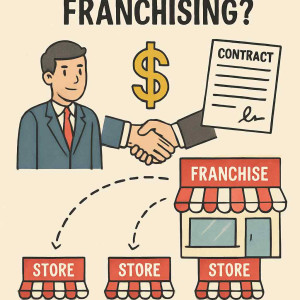
Many business owners begin by exploring licensing as a way to expand their business, only to discover later that they are actually operating as a franchise in the eyes of the law. This confusion is common and can lead to serious legal consequences. Understanding the difference between licensing and franchising is essential for anyone considering business expansion.

Q: Is franchising a type of licensing?

A: Yes. Franchising is a specific and more regulated form of licensing. While all franchises involve licensing, not all licensing arrangements are franchises.

Q: What is the main difference between licensing and franchising?

A: Licensing typically involves granting someone the right to use intellectual property such as a brand name, logo, or product formula. Franchising also involves licensing intellectual property, but it goes further by providing a complete business system along with brand standards, training, and ongoing support.

Q: How do I know if I am really franchising and not just licensing?

A: In the United States, a business relationship is considered a franchise if it meets three legal elements. First, the licensee has the right to use the licensor’s trademark. Second, the licensor provides significant control or significant assistance in how the business operates. Third, the licensee pays a fee of at least 500 dollars before or within the first six months of operation. If all three elements are present, it is legally a franchise, even if you call it a license.

Q: Why does it matter if I accidentally become a franchise?

A: Operating a franchise without complying with franchise laws can result in severe penalties. These can include being forced to offer refunds to franchisees, paying fines, facing lawsuits, or being barred from franchising in certain states. The Federal Trade Commission and franchise registration states monitor violations closely.

Q: Can I avoid franchise laws by removing one of the three legal elements?

A: Some business owners try to avoid franchise laws by eliminating training, avoiding brand use requirements, or not charging fees. However, regulators look at the substance of the relationship rather than the wording of a contract. If it functions like a franchise, it will likely be treated as one legally.

Q: Why is franchising more regulated than licensing?

A: Franchising is more heavily regulated because it typically involves a greater financial investment from the buyer and implies reliance on the franchisor’s expertise and system. The regulations are designed to prevent fraud and protect franchise buyers through required disclosures and legal documentation.

Final Thoughts

Licensing is focused on intellectual property rights, while franchising includes a complete business model with brand standards, training, and support. The legal definition of franchising is clear, and many business owners mistakenly cross the line without realizing it. Understanding the difference now can help prevent costly mistakes later. In the next article, we will explore how to determine whether your business already meets the legal definition of a franchise.

17 10, 2025

What Is Franchising and How Does It Work? (Q&A Guide)

By |October 17th, 2025|Blog, Franchise Development, Q&A|Comments Off on What Is Franchising and How Does It Work? (Q&A Guide)

What is FranchisingIf you have ever wondered how businesses like 7-Eleven, Panda Express, or Häagen-Dazs grew across the country so quickly, the answer is simple: franchising. In this Q&A guide, we break down the fundamentals in plain English so aspiring business owners and emerging franchisors can understand exactly what franchising is and how it works.

Q: What exactly is franchising?

A: Franchising is a business expansion model where a company, called the franchisor, allows an individual or investor, called the franchisee, to open and operate a business using its brand name, systems, and support, usually in exchange for fees and ongoing royalties. It is a partnership. The franchisor provides a proven model and support, and the franchisee provides capital and local business management.

Q: What do franchisors provide?

A: Franchisors typically provide a brand and trademark license, an operating system that includes processes, software, vendor relationships, and standards, training, an operations manual with step-by-step procedures, marketing support, and ongoing business guidance.

Q: What does a franchisee do?

A: Franchisees invest their own money to open the location, hire and manage staff, handle day-to-day operations, follow the franchisor’s system and brand standards, pay initial and ongoing fees, and represent the brand in their local territory. In simple terms, the franchisor establishes the system, and the franchisee implements it.

Q: Are there different types of franchising?

A: Yes. There are two main types. Business format franchising is the most common. It includes a complete business system, training, and brand licensing. Examples include McDonald’s, Supercuts, and Ace Handyman Services. The second type is product distribution franchising, which focuses on product sales or distribution rights. Examples include Ford dealerships and Coca-Cola bottling companies.

Q: Why do businesses franchise instead of opening more company-owned stores?

A: Franchising allows a business to grow faster with less capital because franchisees invest their own money to expand the brand. This reduces financial risk and allows companies to enter more markets quickly. It also puts motivated owners in each location instead of hired managers.

Q: What industries use franchising?

A: Franchising is used in many industries, including restaurants, home services, fitness, beauty, senior care, child education, real estate, retail, hospitality, business services, and automotive. If a business can be duplicated and taught, it can usually be franchised.

Q: Is franchising right for every business owner?

A: No. Franchising is a long-term legal relationship, typically for 10 years or more. A franchisor must be willing to teach others, support franchisees, and maintain brand standards across multiple locations. If someone only wants to run their own business and does not want to document systems or support others, franchising may not be a good fit.

Q: What laws regulate franchising in the United States?

A: Franchising is regulated by the Federal Trade Commission, and many states have additional franchise laws. Before selling a franchise, a franchisor must prepare and provide a legal disclosure known as the Franchise Disclosure Document, also called the FDD. This will be covered later in this series.

Final Thoughts
Franchising can be a powerful way to scale a business if it is done the right way. Success begins with understanding the basics. In this series, we will continue to walk through franchising step by step, covering legal requirements, franchise fees, startup costs, profitability, franchise systems, manuals, and more. Stay tuned for Blog Post 2, What Is the Difference Between Licensing and Franchising.


This excerpt is from episode 27 of The Franchise Manual Podcast with Kit Vinson, owner of FranMan. This blog series is designed to give you clear, practical answers to common franchise questions. In this episode, Kit interviews Rob Vinson, an experienced franchise attorney, for an in-depth discussion on what franchising is and how it works. Enjoy the Q&A below, listen to the full podcast, or do both. You can find episode 27 at the link below.

The Franchise Manual Podcast – Episode #27 – Franchising 101

7 10, 2015

Unusual Manual Topics

By |October 7th, 2015|Blog, Uncategorized|Comments Off on Unusual Manual Topics

I started to attempt to create some “click bait” and call this, Top Ten Crazy Things We’ve Seen in Manuals and You Won’t Believe Number Ten, but I want to temper that a bit and talk about some of the more unusual topics we’ve had to address and the reasoning behind them.

If you’ve read any FDDs or looked at the sample manual outline of our site, you’re familiar with the generic topics that most manuals contain. Since we custom build each manual, we tend to stray from the standard topics and over the past ten years have covered some very unusual subjects.

  • The first category that tends to come up, are topics dealing with the unpredictability of customers. I’ve written sections covering dealing with drunk customers in the drive-through, angry customers wanting a manager, lost children and ruined clothing from an employee accident.  How your franchisees handle these situations says a lot about your business and brand.
  • Second is the unpredictability of franchisees. There are many franchisees looking for a way to express their individuality and we have covered some wild ones. I’ve seen everything from selling totally unrelated products, creating the rogue Twitter account, sponsoring the local topless girl of the year pageant, to giving away a free shotgun with a purchase. It’s important to set limits and create guideline for what you allow and don’t allow. What seems like common sense to you might not be for everyone.
  • Finally, is the unpredictability of employees. Your brand is one of your most valuable assets, both to you and your franchisees. When one of you franchisees’ employees shows up at your yogurt store with the full face tattoo and a “screw the government” t-shirt, unless your franchisee knows how to handle it, you’ve got problems.

I could swap war stories all day long and will be happy to in the comments, but the main point I want to stress is that while you can take a generic outline or template and create a franchise operations manual, I encourage you to set down with a manual writer and really think about where you might have inadequate document structure, inadequate instructions, or outright omissions. Then, create a manual that is unique to your company and your company’s System Standards. It is too easy to rush out a manual and then find you have “no teeth” when a franchisee starts doing something damaging to your brand.

29 07, 2015

Creating a Corporate Style Guide

By |July 29th, 2015|Blog, Uncategorized|Comments Off on Creating a Corporate Style Guide

When we delve into the marketing section of a manual, something that often seems to have received little attention prior to our visit is the corporate style guide. A style guide is a document that we often include in the operations manual, but that may also be a separate document, that outlines the do’s and don’ts of any marketing material or document that is created for outside consumption.

A few things to consider include:

  • Logo and colors. What are the PMS colors? Is there a certain amount of space I need to leave around the logo? What do I use for black and white printing? Can I edit the logo or remove elements to make it fit better? Can I squeeze it when I need it to fit tighter spaces?
  • Logo placement. Where does the logo go on letterhead, business cards and vehicles? Can I make pens or stickers and is there a placement or format promotional materials?
  • Trademark names. What trademark names can I use and how do I identify that they are trademarks? Can I put these on my business card, card or bumper sticker? Where can I use the trademarked phrases?
  • Font sizes, colors and types. What is the official font, size and color? What do we use for headings? Is there a specific footer or header format?

Many companies may provide franchisees pre-approved business card templates and vehicle wrap templates.? In some cases, we see companies that provide all marketing collateral to franchisees so they don’t have to consider a corporate style.? But even if you provide all marketing and PR material for your franchisees, it’s important to have a style guide for your corporate office and marketing department. I always tell clients that if you removed the logo from your marketing piece, it should still look like it came from your company. Standardizing the look and various elements will go a long way of achieving that goal and make sure that all of your customer communications remain consistent.

If you have questions or need help developing a corporate style guide, give us a call.

Go to Top