
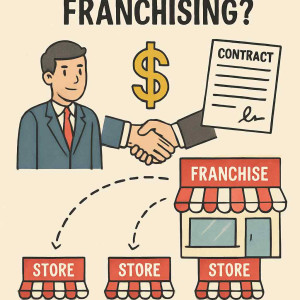
 If you have ever wondered how businesses like 7-Eleven, Panda Express, or Häagen-Dazs grew across the country so quickly, the answer is simple: franchising. In this Q&A guide, we break down the fundamentals in plain English so aspiring business owners and emerging franchisors can understand exactly what franchising is and how it works.
Q: What exactly is franchising?
A: Franchising is a business expansion model where a company, called the franchisor, allows an individual or investor, called the franchisee, to open and operate a business using its brand name, systems, and support, usually in exchange for fees and ongoing royalties. It is a partnership. The franchisor provides a proven model and support, and the franchisee provides capital and local business management.
Q: What do franchisors provide?
A: Franchisors typically provide a brand and trademark license, an operating system that includes processes, software, vendor relationships, and standards, training, an operations manual with step-by-step procedures, marketing support, and ongoing business guidance.
Q: What does a franchisee do?
A: Franchisees invest their own money to open the location, hire and manage staff, handle day-to-day operations, follow the franchisor’s system and brand standards, pay initial and ongoing fees, and represent the brand in their local territory. In simple terms, the franchisor establishes the system, and the franchisee implements it.
Q: Are there different types of franchising?
A: Yes. There are two main types. Business format franchising is the most common. It includes a complete business system, training, and brand licensing. Examples include McDonald’s, Supercuts, and Ace Handyman Services. The second type is product distribution franchising, which focuses on product sales or distribution rights. Examples include Ford dealerships and Coca-Cola bottling companies.
Q: Why do businesses franchise instead of opening more company-owned stores?
A: Franchising allows a business to grow faster with less capital because franchisees invest their own money to expand the brand. This reduces financial risk and allows companies to enter more markets quickly. It also puts motivated owners in each location instead of hired managers.
Q: What industries use franchising?
A: Franchising is used in many industries, including restaurants, home services, fitness, beauty, senior care, child education, real estate, retail, hospitality, business services, and automotive. If a business can be duplicated and taught, it can usually be franchised.
Q: Is franchising right for every business owner?
A: No. Franchising is a long-term legal relationship, typically for 10 years or more. A franchisor must be willing to teach others, support franchisees, and maintain brand standards across multiple locations. If someone only wants to run their own business and does not want to document systems or support others, franchising may not be a good fit.
Q: What laws regulate franchising in the United States?
A: Franchising is regulated by the Federal Trade Commission, and many states have additional franchise laws. Before selling a franchise, a franchisor must prepare and provide a legal disclosure known as the Franchise Disclosure Document, also called the FDD. This will be covered later in this series.
Final Thoughts
Franchising can be a powerful way to scale a business if it is done the right way. Success begins with understanding the basics. In this series, we will continue to walk through franchising step by step, covering legal requirements, franchise fees, startup costs, profitability, franchise systems, manuals, and more. Stay tuned for Blog Post 2, What Is the Difference Between Licensing and Franchising.
This excerpt is from episode 27 of The Franchise Manual Podcast with Kit Vinson, owner of FranMan. This blog series is designed to give you clear, practical answers to common franchise questions. In this episode, Kit interviews Rob Vinson, an experienced franchise attorney, for an in-depth discussion on what franchising is and how it works. Enjoy the Q&A below, listen to the full podcast, or do both. You can find episode 27 at the link below.
The Franchise Manual Podcast – Episode #27 – Franchising 101

